

for the Thai language
| | Internet resource for the Thai language |
F.A.Q. Check out the list of frequently asked questions for a quick answer to your inquiry
recent donations!
Sign-up to join our mailing list. You'll receive email notification when this site is updated. Your privacy is guaranteed; this list is not sold, shared, or used for any other purpose. Click here for more information.
To unsubscribe, click here.
| พ low-class | 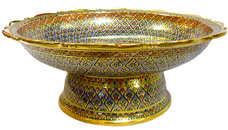 | พอ พาน  | tray on which items are offered to a Buddhist monk | The 30th consonant in the Thai alphabet |
| Page 5 | |||
| พบ. | phaehtF booL reeM | proper noun, abbreviation | [abbreviation for เพชรบุรี ] PBI |
| พบู | phaH buuM | noun, formal, poetic | [used in poetry and literature only] flowers |
| พปช. | phaawM bpaawM chaawM | noun | [abbreviation of พันธมิตรประชาชนเพื่อประชาธิปไตย] |
| พปชร. | noun, abbreviation | [abbreviation for พรรคพลังประชารัฐ] PPRP | |
| พปธ. | phaawM bpaawM thaawM | proper noun, abbreviation | [abbreviation for พรรคประชาธรรม] |
| พฟด. | phaawM faawM daawM | proper noun, abbreviation | [abbreviation for พรรคเพื่อฟ้าดิน] |
| พม. | graL suaangM gaanM phatH thaH naaM sangR khohmM laeH khwaamM manF khohngM khaawngR maH nootH | noun, abbreviation | [abbreviation for กระทรวงการพัฒนาสังคมและความมั่นคงของมนุษย์] |
 พม่า พม่า | phaH maaF | proper noun, geographical, adjective | Burma; Burmese |
| proper noun, geographical | [ประเทศพม่า] Burma; Myanmar | ||
| พย. | phaH yaoM | proper noun, abbreviation | [abbreviation for พะเยา ] PYO |
| พยช | phaH yohtH chaH | verb | to ride upon; to drive |
| พยชน์ | phaH yohtH | noun | a fan |
| พยนต์ | phaH yohnM | adjective | acting magically or automatically |
| adjective | clarified; explained; elucidated; expounded | ||
| proper noun | Phayon [a Thai given name] | ||
| พยพ | phaH yohpH | [suffix] | |
| พยศ | phaH yohtH | adjective | [is] unruly; wild; rebellious |
| verb | to buck; to rebel (as a horse) | ||
| verb | to refuse to obey; flout and fling (a woman or a child) | ||
| พยอม | phaH yaawmM | proper noun | Payom |
| พยัก | phaH yakH | verb, transitive, formal | [usually followed by หน้า  ] to nod ] to nod |
| พยักหน้า | phaH yakH naaF | verb, phrase | to nod; nod in assent |
| พยักพเยิด | phaH yakH phaH yeertF | verb | to nod in agreement |
| พยัคฆ์ | phaH yakH | noun | tiger; fierce beast |
| พยัญชนะ | phaH yanM chaH naH | noun, formal | consonant |
| พยัญชนะที่เกิดกับเพดานแข็ง | phaH yanM chaH naH theeF geertL gapL phaehM daanM khaengR | noun | [grammar] palatal consonants |
| พยัญชนะที่เกิดปลายลิ้นกับปุ่มเหงือก | phaH yanM chaH naH theeF geertL bplaaiM linH gapL bpoomL ngeuuakL | noun | [grammar] alveolar consonants |
| พยัญชนะนาสิก | phaH yanM chaH naH naaM sikL | noun | [grammar] nasal consonant |
| พยัญชนะเสียงข้างลิ้น | phaH yanM chaH naH siiangR khaangF linH | noun | [grammar] lateral consonant; sound of [l] |
| พยัญชนะเสียงควบกล้ำ | phaH yanM chaH naH siiangR khuaapF glamF | noun | [grammar] consonant cluster |
| พยัญชนะเสียงรัว | phaH yanM chaH naH siiangR ruaaM | noun | [grammar] trill consonant; sound of the consont ร in formal, Central Thai |
| พยัญชนะเสียงเสียดแทรก | phaH yanM chaH naH siiangR siiatL saaekF | noun | [grammar] fricative consonant |
| พยัญชนะเหลว | phaH yanM chaH naH laayoR | noun | liquids (consonants) |
| พยัญชนะที่เกิดริมฝีปากกับฟันบน | phaH yanM chaH naH theeF geertL rimM feeR bpaakL gapL fanM bohnM | noun | [grammar] labio-dental consonants; the sound of the consonants ฟ and ฝ |
| พยัญชนะที่เกิดริมฝีปากทั้นสอง | phaH yanM chaH naH theeF geertL rimM feeR bpaakL thanH saawngR | noun | [grammar] bilabial consonant |
| พยับ | phaH yapH | adjective | [of the sky] [is] gloomy; dark; overcast |
| noun | a gloomy; dark; overcast sky | ||
| พยับแดด | phaH yapH daaetL | adjective | [of weather] hazy |
| พยับหมอก | phaH yapH maawkL | adjective, verb, intransitive | [of weather] hazy; foggy; misty |
| พยากร | phaH yaaM gaawnM | [alternate spelling of พยากรณ์ ] | |
| พยากรณ์ | phaH yaaM gaawnM | verb | to forecast; to predict; to prophesize |
| noun | prophecy; forecast; prediction | ||
| noun | [การพยากรณ์] forecasting; forecast | ||
| noun | [นักพยากรณ์] foreaster; prognosticator; predictor | ||
| พยากรณ์อากาศ | phaH yaaM gaawnM aaM gaatL | weather forecast | |
| พยากรณ์อากาศ | phaH yaaM gaawnM aaM gaatL | verb | to forecast the weather |
| พยางค์ | phaH yaangM | noun | syllable |
| classifier | [numerical classifier for a syllable] | ||
| พยาธิ์ | phaH yaatF | [alternate spelling of พยาธิ ] | |
| พยาธิ์ตัวกลม | phaH yaatF dtuaaM glohmM | noun | [พยาธิ์ตัวกลม] roundworm |
| พยาธิ์ตัวตืด | phaH yaatF dtuaaM dteuutL | noun | tapeworm |
| พยาธิ์ปากขอ | phaH yaatF bpaakL khaawR | noun | [พยาธิ์ปากขอ] hookworm |
| พยาธิ์เส้นด้าย | phaH yaatF senF daaiF | noun | threadworm |
| พยาธิ | phaH yaaM thiH | noun, plural | parasitic infestation; ailment; malady |
| tapeworm; parasite; parasitic worm | |||
| พยาธิ | phaH yaaM | [alternate pronunciation of พยาธิ ] | |
| พยาธิชีววิทยา | phaH yaaM thiH cheeM waH witH thaH yaaM | noun, phrase, formal, loanword, Pali | Pathobiology |
| พยาธิตัวจี๊ด | phaH yaaM thiH dtuaaM jeetH | noun | nematode, roundworm, any of several worms of the phylum Nematoda, including hookworm and pinworm |
| พยาธิใบไม้ตับ | phaH yaaM thiH baiM maaiH dtapL | noun | liver fluke |
| พยาธิวิทยา | phaH yaaM thiH witH thaH yaaM | pathology | |
| พยาธิสภาพ | phaH yaaM thiH saL phaapF | noun | pathology |
| Page 5 of 66. « prev page index next » | |||