

for the Thai language
| | Internet resource for the Thai language |
F.A.Q. Check out the list of frequently asked questions for a quick answer to your inquiry
recent donations!
Sign-up to join our mailing list. You'll receive email notification when this site is updated. Your privacy is guaranteed; this list is not sold, shared, or used for any other purpose. Click here for more information.
To unsubscribe, click here.
 |

ช้า ๆ ได้พร้าเล่มงาม chaaH chaaH daiF phraaH lemF ngaamM | Slowly Makes the Blade Beautiful |
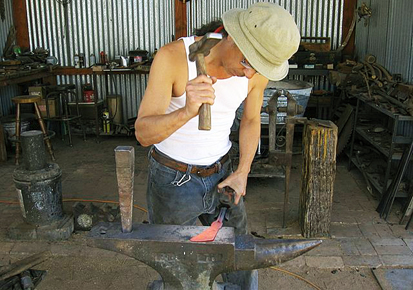
| ว่าถึงการตีพร้านะครับ waaF theungR gaanM dteeM phraaH naH khrapH | (This saying) refers to the forging of a knife (or machete). |
| ช่างตีเหล็กสมัยก่อนเขาใช้เหล็กเป็นแท่ง ๆ ซึ่งเรียกว่าเหล็กแหนบทำ changF dteeM lekL saL maiR gaawnL khaoR chaiH lekL bpenM thaaengF thaaengF seungF riiakF waaF lekL naaepL thamM | Blade smiths in olden times used steel bars which were called 'sheaves of metal.' |
| โดยมีเตาเผาซึ่งใช้ถ่าน dooyM meeM dtaoM phaoR seungF chaiH thaanL | (The blacksmith) used a kiln (or forge) fired by charcoal. |
| มีเครื่องเป่าลมเข้าไปให้ร้อนแรง meeM khreuuangF bpaoL lohmM khaoF bpaiM haiF raawnH raaengM | Bellows were also used to produce a high heat. |
| เผาเหล็กให้แดงฉานก่อนนำมาตีบนทั่งเหล็กด้วยค้อน๘ปอนด์ phaoR lekL haiF daaengM chaanR gaawnL namM maaM dteeM bohnM thangF lekL duayF khaawnH bpaaetL bpaawnM | (The blade smith) would heat the metal until it was bright red prior to it being taken to the metal anvil for beating with an eight pound hammer; |
| โดยให้อีกคนหวดกระหน่ำ dooyM haiF eekL khohnM huaatL graL namL | ...another person would hammer at the metal bar (in turn). |
| พอเหล็กหายแดงก็ซุกเข้าเตาอีก แดงได้ที่ก็เอาออกมาตี phaawM lekL haaiR daaengM gaawF sookH khaoF dtaoM eekL daaengM daiF theeF gaawF aoM aawkL maaM dteeM | Once the metal loses its red color, it is placed into the kiln (or forge) once again; when the piece was red again, it is removed and hammered again. |
| ทำอยู่อย่างนี้จนได้รูปร่าง thamM yuuL yaangL neeH johnM daiF ruupF raangF | This process continues again and again until the metal attains the (desired) shape. |
| ค่อยใช้ค้อนขนาดเหมาะมือของช่างตบแต่งให้ได้ลักษณะ โดยอาศัยเตาเผาให้เหล็กอ่อนตัวก่อนตีเช่นกัน khaawyF chaiH khaawnH khaL naatL mawL meuuM khaawngR changF dtohpL dtaengL haiF daiF lakH saL naL dooyM aaM saiR dtaoM phaoR haiF lekL aawnL dtuaaM gaawnL dteeM chenF ganM | Little by little, hammers of various appropriate sizes are used and the blade smith obtains the correct characteristics (of the knife) with the kiln softening the metal each time before it is hammered. |
| เสร็จแล้วก็ใช้ตะไบแต่งให้เรียบ และลับให้คม setL laaeoH gaawF chaiH dtaL baiM dtaengL haiF riiapF laeH lapH haiF khohmM | Once this (stage is) completed a file is used until the metal is smooth and it is ground and whetted until it is sharp. |
| ค่อยชุบให้เกิดความกล้าแข็ง khaawyF choopH haiF geertL khwaamM glaaF khaengR | It is then plated to create hardness. |
| พอดี ๆ กว่าจะได้แต่ละเล่ม ต้องใช้เวลาเป็นครึ่งค่อนวันแหล่ะครับ phaawM deeM deeM gwaaL jaL daiF dtaaeL laH lemF dtawngF chaiH waehM laaM bpenM khreungF khaawnF wanM laeL khrapH | For adequate quality, each blade will take almost half a day to be completed. |
| นี่คือที่มาของภาษิตข้างต้น neeF kheuuM theeF maaM khaawngR phaaM sitL khaangF dtohnF | This, then, is the historic background for the above saying. |